Monday, February 25, 2008

Logo design | Final

After much deliberation and soliciting of opinions, I have decided to go with the circular logo. It has the most versatility in that it is easy to read at all sizes, can be used with almost any color scheme, and evokes 'records' without even having to say "records".
With the circular logo I have chosen, the logo can be used to distinguish different series of records, or time periods in jazz. For example, a series from the 50s could have a black background, while one from the 60s could use orange. This logo is easily recognizable on any background, so it can be seen from far away on a music store shelf (since older jazz listeners might actually frequent a brick-and-mortar store!). It is simple, yet says retro + cool + jazz + records all at once. In it's main form, it has a slight opacity that allows the circular-record portion to blend into the background, though the text stands out with its color.

You can see below one way it could be used on an album cover.


Wednesday, February 20, 2008

Re:Take records: The Pitch

Note: When these were converted to jpeg the blue was changed and is showing up too light and a bit brighter than intended.


As the RE:TAKE customer is knowledgeable of jazz and familiar with the Blue Note, Impulse and Columbia LP covers of the 50s and 60s (examples of which can be seen above), my logo designs are intended to evoke that era. As such, they may echo layouts, typefaces and colorways of that time, as well as hopefully the feeling in general of these LPs.

Concept 1: All text, lowercase Clarendon with Univers Light Condensed. The blue is taken from many jazz releases of the hard bop time-period of jazz, the period most RE:TAKE releases were originally recorded. 'RECORDS' is in the typeface Univers Light Condensed; it is a typeface used heavily during that time and has a retro, cool feel to it. Due to the box outlining TAKE, this logo will be easily recognizable on album/cd covers and in advertising.


Concept 2: This direction uses a circle as a symbol for a record, or LP. When combined with the typeface Clarendon, in all-caps or all lowercase, and the black/white/cool blue colorway, it should be effective in evoking a sense of retro cool in the viewer. One version includes a turntable arm, working further in the direction of symbolizing a record and a player. By using solid black in the background, it will be instantly recognizable by the customer and will stand out from any background.


Concept 3: Another all-type direction, this involves modern geometric shapes, right angles and spacial dimensions of the original LP designs. The logo is transparent in the back, and can be used in many different color combinations to allow it to stand out in various usages and situations.


Logos Pt. 2

I have narrowed down to a few variations now. I tried the turntable arm with the circular designs but it just looked too detached to really hold together as a logo, so that is out. Of these my favorite is actually the one on the bottom right, inside the box. I still like the ones in the circle though.

Sunday, February 17, 2008

First set of logos


This is my first set of logos. I used the slab-serif typeface Clarendon, as I think that evokes the right time-period and has been used for many jazz covers in the past. Colorwise I went with a simple scheme of black/gray/light blue/and possibly working in some orange. (click image to view at 100%)

First notes + sketches


I listed out some of the symbols I might be able to use to evoke jazz and the time-period where most of the releases would be from, along with some basic sketched ideas for the logo. (click on photo to see the whole page)

Monday, February 11, 2008

Logo design/Brand Identity project.

For the brand identity project, I am designing a logo for the record label RE:TAKE Records. RE:TAKE specializes in re-issuing jazz records from the 50's and 60's on cd, vinyl and digitally. There are many "lost recordings" of both live and studio sessions that are of great interest to the jazz fan. RE:TAKE searches for these recordings and re-masters them to produce high-quality releases. The typical customers are jazz afficionados of all ages, though the audience tends to be older and mostly male. As an afficionado this customer is extremely knowledgeable on jazz and RE:TAKE wants to be the label this customer looks for when they look for music to purchase. Their mission statement is: "To mine the archives of lost jazz recordings to restore treasures in digital clarity".

RE:TAKE is a small company and has a specific focus; also small is their audience who is familiar with what they do. Due to their smaller audience they don't have to advertise themselves extensively, other than ads in jazz and other music magazines for specific releases. They want a logo that they can use in color and b/w for album packaging and also on the web. They want a logo that is modern, yet has a retro feel evoking the era of classic jazz from the 50s to 60s.

Monday, February 4, 2008

Turning a letter into another letter, pt. 2

I finished turning the 'G' into a 'd'. By adding extra points, I was able to fine-tune the serif area on the ascender to make it match fairly well the actual area on the Garamond 'd'.

vector artwork


From You Work For Them. This is from a set of cityscapes in vector form, including skyscrapers, overhead views and street layouts. As a fan of big cities and illustration, these are right down my alley. I like how hand-done they appear to be, while they can be resized, of course, and blown up big and the colors can be adjusted.


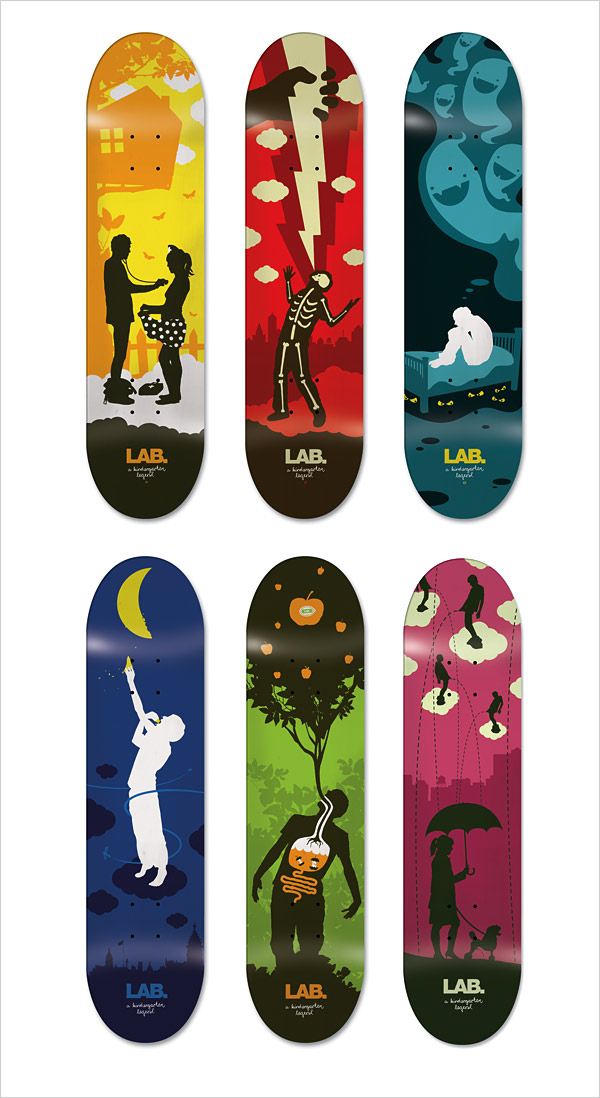
As a former skateboarder, I love these graphics designed by Emil Kozak, a designer from Denmark. As you can tell, I prefer flatter artwork and silhouettes, not the 3-d stuff as much... (go print!)


I do like some 3-d stuff; this work is by a Russian artist, Maria (last name I couldn't find). Though some of her work borders on cheesy sci-fi/fantasy novel covers, there is also much that is really impressive and moving. The difference between this style and the flatter styles in the previous examples shows the wide range of work that can be produced using vectors in Illustrator.